


Single Entry vs Multiple Entry Dubai Visa – Which One Should You Choose?

Choosing the right Dubai visa types matters more than most travellers realise. Choosing between visa types like single-entry and multiple-entry is like choosing between upfront cost and travel flexibility. Picking the wrong visa can lead to being locked out of the country. It can also lead to paying more in emergency reapplications. Dubai welcomes millions of visitors each year. It welcomed 9.88 million people in Jan-Jun of 2025 alone. The visa system is structured. It is rule-based. It is also unforgiving if you choose the wrong option. This guide breaks down all the options clearly so you can choose with confidence.
Why Choosing the Right Dubai Visa Type Is Important
Choosing the right visa type for Dubai is a strategic decision that affects your budget, legal standing, and travel flexibility. A wrong visa can cause problems like:
- You may be denied boarding at the airport
- You may lose hotels and flight bookings
- You may need to pay for a fresh visa
- You may face delays that can affect work or family plans.
Many travellers think all tourist visas allow re-entry. That is incorrect. The entry type of each visa clearly states how many times you can exit and re-enter Dubai. For example, once you exit on a single-entry visa, it expires immediately.
Overview of Dubai Visa Types for Travellers
In 2026, Dubai made the visa process simple. Dubai visa types are categorised by stay duration and stay frequency. Choosing correctly is essential. Single-entry visas are now non-extendable once you exit the country.
Single-entry visas have 30-day and 60-day options. They allow you to enter the country once. There are also 90-day single-entry, but those visas are usually issued through specific sponsors. You can extend this visa twice for an additional 30 days without leaving the UAE.
The multiple-entry visa allows you to enter and exit the country many times within the validity period. This is especially useful if you are using Dubai as a hub to visit Qatar, Oman, or Saudi Arabia. This can be extended without leaving the country. You are allowed two 30-day extensions via GDRFA/ICP Smart Apps.
What Is a Single-Entry Dubai Visa?
The Dubai single-entry visa remains one of the most popular choices for general tourism. The moment you exit the country on this visa, it is automatically cancelled.
Who Should Choose a Dubai Single-Entry Visa?
- One-time Travellers: Your itinerary starts and ends in the UAE. You have no side trips to neighbouring countries.
- Short Holidays: Perfect for a short vacation focused on Dubai, Abu Dhabi, or other emirates.
- First-time Visitors: The application process is generally faster and requires less financial documentation. It is a standard entry point for new tourists.
Limitations of a Single Entry Visa
- No Re-entry Allowed: If you decide to take a trip to Muscat or go on a cruise that enters international waters, you cannot go back to the UAE on the same visa.
- Exit Means Expiry: Even if you have 25 days left in your 30-day visa, it dies the second your passport is stamped at the exit gate.
What Is a Multiple-Entry Dubai Visa?
The Dubai multiple-entry visa is designed for high-mobility modern travellers. It allows you to enter and exit any of the seven Emirates as many times as you want within the visa validity period.
Who Needs a Dubai Multiple Entry Visa?
- Frequent Travellers: If you use Dubai as a transit hub for trips across the GCC. This visa eliminates the need for a new application every time you fly in.
- Business Visitors: Consultants, investors, and project managers who need to attend recurring meetings or exhibitions.
- Digital Nomads: Remote workers who want to set up a base in Dubai. They can explore the Middle East region.
Advantages of a Multiple Entry Visa
- Flexibility: You are not locked in. If something comes up that needs you to return shortly after you have left, you can fly back immediately. You do not need to wait for visa approval.
- Time & Cost Efficiency: It has a higher upfront cost. But it saves money in the long run. A 30-day multiple-entry visa is cheaper than paying for 3 separate single-entry visas. With multiple entries, you can also save time. You do not have to spend time gathering documents and waiting for processing each time.
How to extend my multiple-entry visa for Dubai from the UK
According to ICP, tourist/visit visas can be extended once or multiple times, up to 120 days. It is applicable for both single-entry and multiple-entry visas.
Single Entry vs Multiple Entry Dubai Visa – Key Differences
| Feature | Single-Entry Visa | Multiple-Entry Visa |
| Number of Entries | One entry only. | Unlimited entries within validity. |
| Exit Policy | Visa becomes void the moment you clear exit immigration. | Visa remains active after you exit the country. |
| Best For | One-off vacations, direct flights, or fixed business meetings. | Cruise passengers or frequent visitors. |
| Typical Durations | 30 or 60 days. | 30 days, 60 days, or 5 years. |
| Regional Travel | Not suitable if visiting nearby countries (e.g., Oman) and returning. | Ideal for using Dubai as a “base” to explore the Middle East. |
| In-Country Extension | Generally allowed for an additional 30/60 days. | Allowed, maintaining the multiple-entry privilege. |
| Administrative Effort | Must reapply for a new visa for every separate trip. | One application covers all trips within the period. |
How to Decide the Right Dubai Visa Type Based on Your Travel Plans
Choosing the right type of visa for Dubai is no longer about the length of your stay. It is about your travel behaviour.
-
Short Vacation
You should usually go for a 30-day or 60-day single-entry visa if you do not plan on exiting the country. It is the most straightforward and least expensive option. If your trip is 25 days long, choose the 60-day visa version. With the abolition of the grace period, you can avoid overstay fines if an emergency occurs.
-
Multiple Trips or GCC “Hubbing”
If you are looking to use Dubai as a base to visit Oman, Saudi Arabia, Qatar, or go on an international cruise, then you should invest in Dubai multiple-entry visa. If you are going on a cruise that sails to Bahrain and then comes back to Dubai, your visa must be multiple-entry for you to gain access.
If you intend on spending time with your family the whole time in the UAE, a single-entry visa should be enough. You can also opt for the 5-year multiple-entry tourist visa that offers 90 days per visit with extendable options. This is also good for businessmen who have regular work in the Gulf region. This would help them travel easily without filling out paperwork for half a decade.
Whether you need a single-entry or multiple-entry Dubai visa, choosing the wrong one can disrupt your entire trip. To know more about the detailed Dubai visa types, visit Tour to Dubai.
Dubai Visa Types for UK Travellers & UK Residents
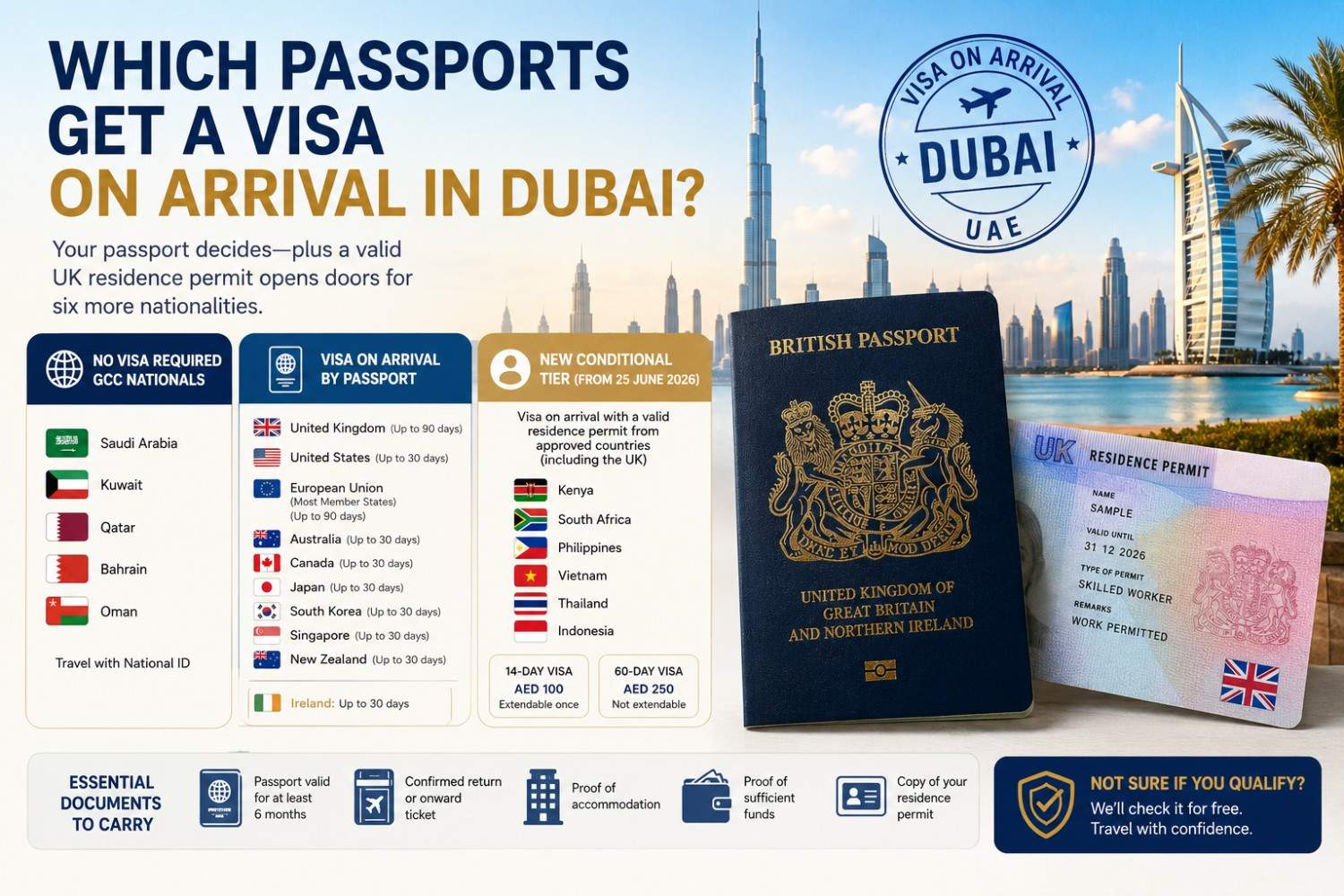
For UK travellers, the Dubai visa types process depends entirely on the passport you hold. In 2026, the UAE maintained its friendly entry policy for British citizens. At the same time, the authorities have refined the rules for UK residents with foreign passports.
-
UK Passport Holders (British Citizens)
If you hold a British passport, travelling to Dubai is much more straightforward.
- Visa on arrival: You do not need to apply for a visa in advance. You will be given a 90-day visit visa free of charge.
- Extensions: You can extend this visa for an additional 30 days or 60 days without leaving the country.
-
UK Residents (Non-British Citizens)
If you live in the UK but hold a different passport, you might not be qualified for a visa on arrival. However, many residencies have a significant advantage over Dubai visa types in terms of entering the UAE.
- The resident advantage: Citizens of several countries (most notably India) who hold a valid UK Residence Visa or BRP (valid for at least 6 months) are eligible for a Visa on Arrival in Dubai.
- Extension: This 14-day visa can usually be extended once for an additional 14 days.
-
Nationality-Based Considerations
UK residents whose nationalities do not qualify for a visa on arrival must get a pre-arranged visa.
- Pre-Arranged Tourist Visas: You must apply for a 30-day or 60-day visa before you fly. This is most easily done through travel partners like Tour to Dubai.
- 5-Year Multiple Entry Visa: For UK residents who visit Dubai frequently for business or family, this “sponsor-free” visa is highly recommended.
Common Mistakes When Selecting Dubai Visa Types
Travellers often make these errors:
- Choosing single entry for a trip with many destinations
- Assuming visa type can be changed later
- Confusing stay duration with visa expiry
- Booking flights before visa clarity
Dubai visas cannot usually be modified after approval. A wrong choice often means starting over.
FAQs – Dubai Visa Types, Single Entry & Multiple Entry
Q. Which Dubai visa type should I apply for?
A. You should choose based on how many times you plan to go in and out of Dubai on your trip.
Q. What is the difference between a single-entry and a multiple-entry visa?
A. A single entry lets you visit once. With multiple entry, you can visit more than once while the visa is still valid.
Q. Is a multiple-entry visa more expensive than a single-entry?
A. Yes. The cost is higher up front. But it saves money on frequent trips.
Q. Can I re-enter Dubai on a single-entry visa?
A. No. Your single-entry visa will no longer be valid once you leave Dubai.
Q. Can I change my visa type after approval?
A. No. You cannot change the type of visa you have after it has been approved. You need to apply again for the right type of Dubai visa.
Final Thoughts – Choose the Right Dubai Visa Type with Confidence
Dubai visa types are simple once you understand the entry rules. The question has become less about how long you stay and more about how many times you need to enter. If your plans are fixed, go for a single entry. If you have a flexible plan, go for a multiple-entry visa. Always review the full list of Dubai visa options before applying. Choosing right once saves time and money later.