


Which Dubai Visa Should You Choose? Single Entry, Multiple Entry and Other Options Explained

When planning a trip from the UK, it’s important to know the different types of visas for Dubai. Visa types are not the same for all. Your visa depends on how long you plan to stay, how many times you want to enter the country, and how quickly you need it processed. Many people in the UK find it hard to understand the different Dubai visa types. The goal is to give you reliable information that will help you plan with confidence.
What Is a Dubai Travel Visa?
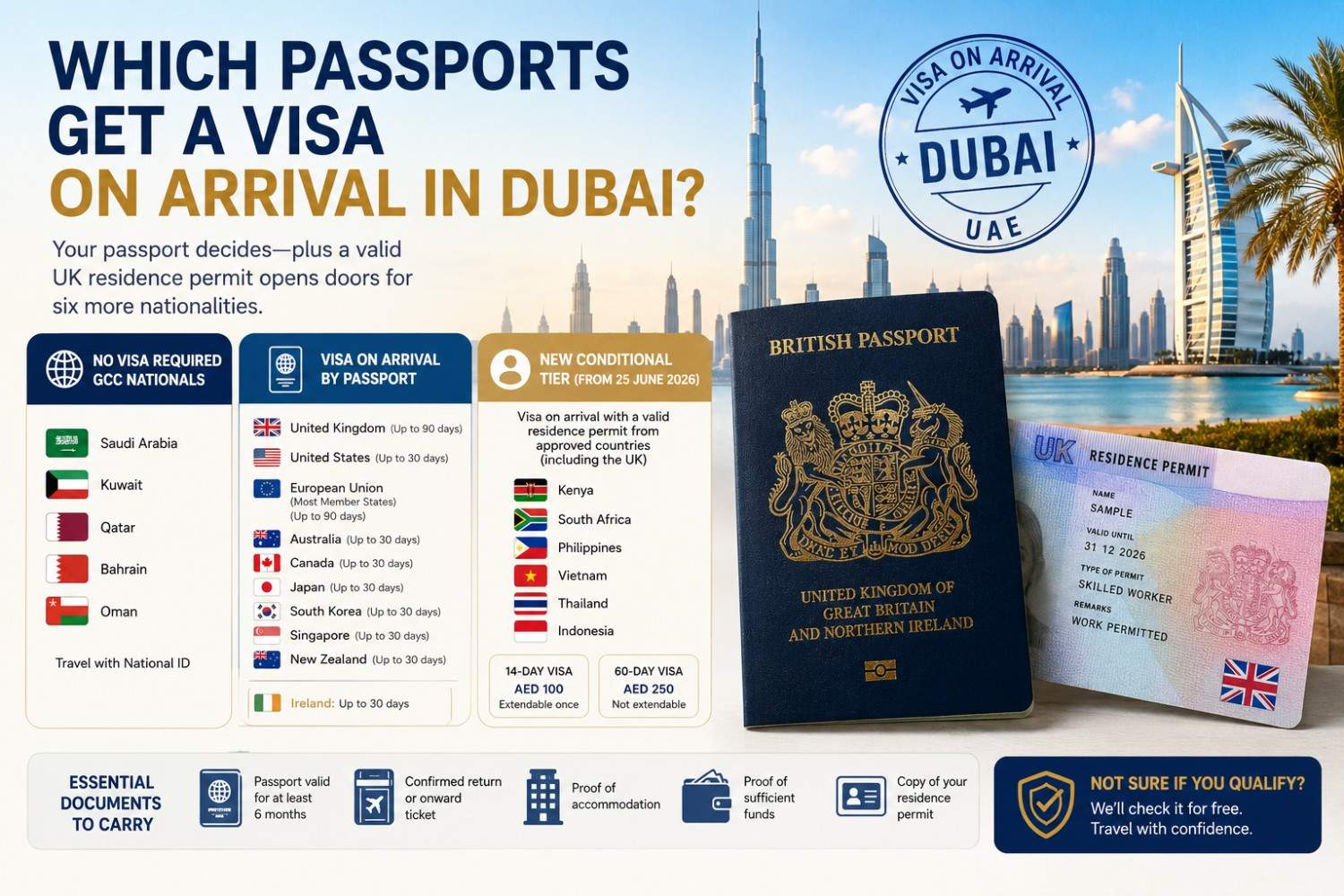
A visa for Dubai is the official permission allowing visitors to enter Dubai in the United Arab Emirates. Most people with UK passports need a visa to travel to Dubai, unless they meet the requirements for visa-free entry under UAE law. Tourist visas are the most common choice for short trips and vacations. But there are different rules and prices for other types of visas. These visas include work or residency visas.
This guide specifically focuses on tourist visas. They are more useful for people who are on vacation or visiting for a short time. Look into all your Dubai visa options so you do not have to worry at the last minute.
What are the Different Types of Visas for Dubai Travel
Dubai offers different visa categories, but tourists usually choose between a few options. Some of these are tourist visas that let you enter the country one or more times within a set amount of time. A single-entry visa allows one visit to Dubai. You can enter and leave the country several times with a multiple-entry visa. The Dubai visa type you need depends on how long you plan to stay and why you are going.
Single Entry Visa for Dubai
A single-entry visa Dubai is one of the most commonly used visas by tourists. It allows you to enter Dubai once and stay for the approved duration. Once you leave the country, the visa expires automatically, even if you have unused days left. The type of visa usually comes with a 30-day or 60-day stay option. It works best for travellers who have no plans to leave and re-enter Dubai. Many first-time visitors choose this option because it is simple and cost-effective. If your trip is properly planned, you can avoid unnecessary visa expenses. To avoid any problems, apply for a single-entry visa Dubai as soon as possible.
Multiple Entry Visa for Dubai Explained
A multiple-entry visa Dubai offers more flexibility. It lets people go in and out of Dubai as many times as they want while their visa is still valid. This means you do not have to get a new visa every time you come back. The option is good for travellers who visit Dubai frequently or those who plan to combine Dubai with trips to nearby destinations. Business travellers often prefer this visa because it provides repeated short visits without repeated paperwork. This visa costs more than a single-entry visa, but it offers convenience and flexibility that is worth the cost for many travellers.
Check Multiple Entry Dubai Visa Options Here.
Single Entry vs Multiple Entry Visa – Key Differences
| Aspect | Single-Entry Dubai Visa | Multiple-Entry Dubai Visa |
| Basic Meaning | Allows you to enter Dubai once during the visa validity period. Once you exit, the visa ends. | Allows you to enter and exit Dubai multiple times. |
| Best Suited For | Travellers with fixed, one-time plans, such as a holiday or a single business visit. | Travellers who need flexibility. This includes frequent business visitors or people combining Dubai with other destinations. |
| Travel Flexibility | Limited. Your entire trip must happen in one continuous stay. | More flexibility. You can leave Dubai and return without applying again. |
| Cost Perspective | Affordable. Makes it ideal for budget travellers. | It costs more upfront, but can save money if you would otherwise apply multiple times. |
| Typical Real-Life Use Case | A UK traveller visiting Dubai for 5–10 days and returning home directly. | A traveller visiting Dubai, flying to another country, and returning to Dubai within the same trip. |
| Impact of Exiting Dubai | Exiting Dubai immediately cancels the visa, even if days remain. | Exiting does not cancel the visa as long as it is still valid. |
| Planning Requirement | Requires clear travel dates and no changes in itinerary. | Suitable for uncertain plans. |
| Risk if Plans Change | Higher risk. Any unexpected exit means you must apply for a new visa. | Lower risk. The visa continues to work across multiple trips. |
| Convenience Level | Simple and straightforward if plans are fixed. | More convenient for repeat travel, despite a slightly more detailed application. |
| Overall Practicality | Practical for short, simple trips with no additional travel involved. | Practical for long-term or multi-destination travel plans. |
How to Choose the Right Dubai Visa Type
Here are a few practical things to think about when choosing the right Dubai visa type.
- Travel Frequency: If you are only going to Dubai once, get a single entry. If you want to go on more than one trip, get a multiple-entry one.
- Length of Stay: Most of the time, short stays only need a single-entry visa. Longer stays need options that are more flexible.
- Purpose of Visit: Different types of visits, such as business, tourism, and family visits, require different types of visas.
- Cost: Single-entry visas are cheaper. Visas that let you enter multiple times cost more. However, they are more flexible.
Still not sure? Our visa experts can help you pick the right Dubai visa.
How to Apply for a Dubai Visa from the UK
Applying for a Dubai visa from the UK is mostly an online process. To apply for a Dubai visa, you need to follow the steps below:
- Choose the right visa type
- Complete the online application form
- Upload the Dubai visa requirement documents
- Pay the visa fee
- Wait for approval
Documents Required
You have to upload basic documents to gain entry to the UAE. Some common documents include:
- Valid passport
- Passport-sized photos
- Travel details
Processing Time
Dubai visa processing time is quick. Standard options take a few days, but urgent options might be available. If you want to make the whole process stress-free, apply for a Dubai tourist visa here.
Dubai Visa Processing Time & Approval
As stated earlier, the Dubai visa processing time is generally quick, but it varies. Most visas are approved within a few working days if the documents are correct. Delays usually happen due to a lack of preparation, incorrect documents, or a high volume of applications. Make sure to have an early start on your visa application to avoid unpleasant surprises.
Common Mistakes to Avoid When Applying for Dubai Visa
Visa problems come from small mistakes. Some of the most common problems are:
- Choosing the wrong visa type
- Passport validity is less than six months
- Blurry or incorrect documents
- Incorrect personal details
There may be delays or even rejections in some cases because of these reasons. Most of these problems can be avoided by carefully reading the requirements. You should also look over the application before sending it in.
Why Apply Dubai Visa Through Tour To Dubai
Using a trusted visa service like Tour to Dubai simplifies the process for many travellers. Tour to Dubai offers expert UK-focused support, clear instructions, and experienced guidance to take care of everything related to the visa. The team focuses on providing:
- UK-focused visa support
- Clear guidance at every step
- Fast processing options
- Experienced visa professionals
- High approval success rate
View all Dubai visa types and apply today.
FAQs About Visa for Dubai
Q. How long is a Dubai visa valid?
A. Dubai visa validity is dependent on what kind of visa you applied for. The validity usually has a range of 30-60 days.
Q. Can I extend my Dubai visa?
A. Some visas are extendable when it comes to a Dubai visa. However, the rules depend on the visa type.
Q. Is a Dubai visa refundable?
A. Once the processing has started, Dubai visas are usually not refundable.
Q. Is there a difference between a UAE visa and a Dubai visa?
A. The UAE’s immigration laws say how Dubai visas are given out.
Q. Do UK passport holders need a visa for Dubai?
A. It depends on how long you stay and why you are there. Most of the time, you need a visa to stay longer.